Best Threema Alternatives for Secure Business Communication

Threema has earned its reputation. Swiss jurisdiction, end-to-end encryption across all message types, no phone number required to register, and a business tier that adds the administrative controls the consumer version lacks. For European organizations with strong data sovereignty requirements, it is one of the more credible secure messaging options available.
But it is not the right fit for every organization, and the reasons vary.
Some find the integration ecosystem too narrow. Others need voice calling as a primary feature, not an afterthought. Some organizations outside Europe find the Swiss jurisdiction argument less compelling than Threema's marketing assumes. And some IT teams need a platform their employees will actually recognize and adopt without a change management campaign.
If Threema is on your shortlist but you're evaluating alternatives before committing, this guide covers the most relevant options honestly.
What Threema Gets Right and Where It Has Limits
To choose the right alternative, it helps to be clear about which Threema characteristics you're trying to replicate and which limitations you're trying to avoid.
Threema's genuine strengths:
- End-to-end encryption across messages, calls, and file transfers by default
- No phone number or email required for registration, reducing personal data exposure
- Swiss data jurisdiction, outside EU and US legal reach for data requests
- Threema Work adds centralized user management, broadcast messaging, and compliance features
- Strong privacy model with minimal metadata collection
Where Threema has limits:
- Limited brand recognition outside Europe, which affects employee adoption in global organizations
- Narrower integration ecosystem compared to major enterprise platforms
- Voice calling works but is not a primary strength
- No native CRM integration or call logging
- Smaller partner and developer ecosystem than Teams, Slack, or similar platforms
With these in mind, here are the alternatives worth considering.
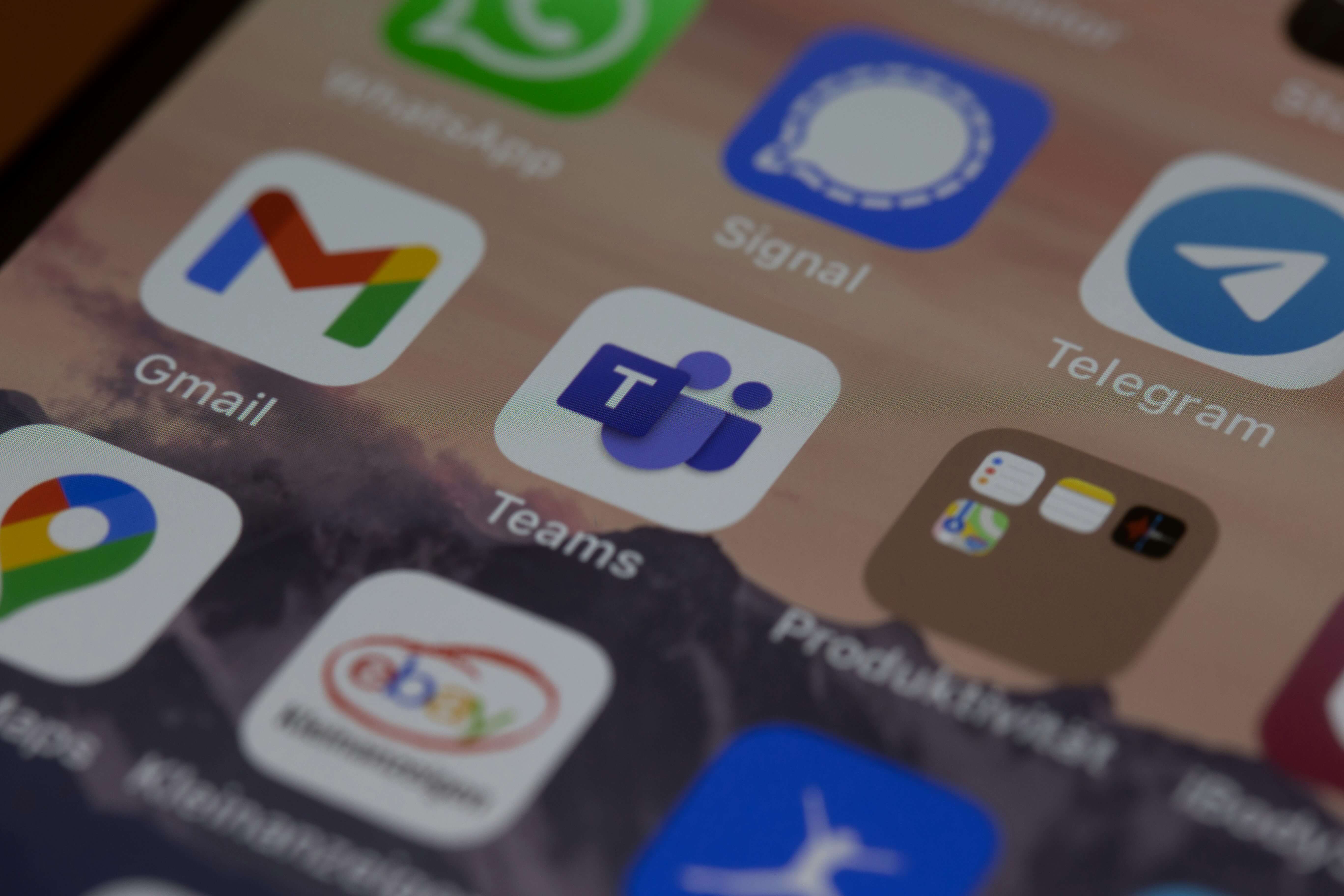
Signal
Signal is the closest ideological equivalent to Threema. Both were built around the principle that communication privacy should be the default rather than a premium feature. The Signal Protocol, which underpins Signal's encryption, is the most rigorously audited messaging encryption architecture available and is used as the foundation by several other platforms including WhatsApp.
Where Signal differs from Threema is in enterprise suitability. Signal requires a phone number to register, which Threema does not. More significantly, Signal has no administrative controls, no audit trail, no centralized user management, and no organizational data ownership. Conversation history lives on individual devices.
For small teams or individuals where the primary requirement is message confidentiality and organizational control is not a concern, Signal is arguably the strongest option on privacy grounds. For enterprise organizations that need to manage communication at scale, it is a stepping stone rather than a destination.
Wickr (AWS)
Wickr is the enterprise alternative that most directly matches Threema's security architecture while adding the organizational controls that Threema Work provides at a more mature level.
End-to-end encryption covers messages, calls, and file transfers. Wickr does not hold encryption keys and cannot access content. The administrative controls, centralized user management, message expiration policies, compliance reporting, and on-premises deployment options for organizations with strict data sovereignty requirements, are more developed than most alternatives in this category.
For organizations that were drawn to Threema specifically for its encryption architecture and Swiss jurisdiction, Wickr's security model is comparable, and its compliance tooling is deeper. The AWS acquisition brings it into a broader enterprise ecosystem, which is an advantage for organizations already running AWS infrastructure.
The limitations are adoption and polish. Wickr is not a tool most employees will recognize from personal use, and the interface reflects its origins in security-sensitive rather than consumer contexts. Organizations outside the government, defense, and financial services sectors may find the learning curve affects adoption in ways that undermine the platform's value.
Microsoft Teams
Teams is the pragmatic choice for organizations already running Microsoft 365, and it appears on this list not because it matches Threema's privacy model but because it represents the most common real-world alternative for organizations evaluating their secure messaging options.
The administrative controls are mature and comprehensive. Compliance features including eDiscovery, retention policies, legal hold, and audit logging are well developed. The integration ecosystem is the broadest of any platform on this list. For organizations where regulatory compliance documentation matters more than encryption depth, Teams makes the compliance case well.
The honest limitation relative to Threema is encryption. Teams does not offer end-to-end encryption for standard messaging or group calls. Microsoft retains access to message content. For organizations moving to Threema specifically because of confidentiality concerns, Teams does not address the core requirement. For organizations where administrative control and compliance documentation are the primary drivers, and where the Microsoft ecosystem integration is a genuine operational benefit, Teams is a realistic option.
Element (Matrix Protocol)
Element addresses a concern that Threema's Swiss jurisdiction argument approaches but doesn't fully resolve: the question of what happens when you have to trust a vendor with any part of your communication infrastructure.
Threema is operated by a Swiss company under Swiss law. That is a meaningful privacy advantage over vendors subject to US or EU legal frameworks. But it still requires trusting Threema as an organization. Element on the Matrix protocol removes this dependency entirely for organizations willing to self-host.
A self-hosted Matrix deployment means conversation data never leaves the organization's own infrastructure. The protocol is open source and independently auditable. End-to-end encryption is available and verifiable. No third party, regardless of jurisdiction, holds any part of the communication stack.
For Threema users whose primary concern is data sovereignty rather than vendor trust specifically, Element offers a more complete answer. The trade-off is operational overhead: self-hosting requires engineering resources to deploy, maintain, and secure. The user experience varies by client application. And the complexity of the federation model adds administrative burden that most organizations don't need.
Element is the right answer for technically sophisticated organizations with a principled objection to any vendor dependency. It is not the right answer for organizations that need a deployable solution with minimal IT overhead.
Slack (Enterprise Grid)
Slack is not a natural Threema alternative on security grounds, but it appears here for a specific reason: it is what many organizations actually switch to when they decide Threema's adoption challenges outweigh its privacy benefits.
The cultural fit between Slack and most modern workplace teams is strong. The interface is fast and familiar, the integration ecosystem is extensive, and the channel structure maps naturally to how most organizations communicate. Enterprise Grid adds centralized administration, Enterprise Key Management so the organization holds its own encryption keys, and compliance exports that satisfy most regulatory requirements.
The encryption story requires honest framing. Standard Slack does not offer end-to-end encryption. EKM means Slack cannot access your content without your organization's keys, but this is architecturally different from E2EE at the protocol level. For organizations that chose Threema specifically for its encryption model, Slack is a step backward on confidentiality.
For organizations whose primary Threema concern was adoption difficulty rather than encryption depth, and where the integration ecosystem and user experience matter significantly for actual platform usage, Slack Enterprise Grid is a realistic option.
PhoneHQ
PhoneHQ approaches secure business communication from a different angle than Threema and most of the alternatives on this list. Where Threema is a messaging-first platform with voice as a secondary capability, PhoneHQ is built around the full communication stack: encrypted messaging, business calling, AI knowledge tools, and emergency notification in a single platform.
For organizations that chose Threema to address messaging security but still have employees using personal phones for business calls, PhoneHQ closes a gap that Threema leaves open. Internal messaging and calls are end-to-end encrypted under an Enterprise Key Management model, with metadata audit logs available to administrators for compliance purposes without the vendor accessing message content. External calls can be transcribed and logged to the CRM automatically.
The trade-off relative to Threema is scope rather than security depth. Threema is a focused, privacy-first messaging tool. PhoneHQ is a broader platform that includes secure messaging as one component of a unified communication stack. Organizations whose only requirement is encrypted messaging with strong privacy guarantees will find Threema or Wickr a more focused fit. Organizations that want secure messaging alongside business calling, CRM integration, and operational communication tools, all under one administrative interface, will find PhoneHQ worth evaluating.
PhoneHQ is also more likely to be adopted without resistance than Threema in organizations outside Europe, because it doesn't require employees to learn a tool with no consumer equivalent.
How to Choose The Best Secure Business Communication Platform
The right Threema alternative depends on which of Threema's characteristics matters most to your organization and which limitation is driving the evaluation.
If encryption architecture and minimal metadata collection are the primary requirements and organizational scale is small, Signal is the strongest option on pure privacy grounds.
If enterprise-grade encryption with mature administrative controls is the requirement, Wickr is the most direct equivalent with deeper compliance tooling.
If complete infrastructure ownership matters above all else and the organization has engineering capacity, Element on Matrix with self-hosting provides the most thorough data sovereignty.
If Microsoft ecosystem integration and compliance documentation are the priorities and full E2EE is not a hard requirement, Teams is the pragmatic enterprise default.
If user experience and adoption matter alongside improved compliance capabilities, and encryption depth is a secondary concern, Slack Enterprise Grid is worth evaluating.
If unified communication across messaging, voice, and operational tools is the goal, with enterprise security built into the architecture, PhoneHQ covers the broadest scope without requiring employees to adopt an unfamiliar tool.
A Note on the Adoption Reality
One pattern that comes up consistently in organizations evaluating Threema is the gap between the security case and the adoption reality. The privacy model is sound. The interface is functional. But employees who have never heard of Threema, and who are accustomed to the speed and familiarity of consumer messaging apps, often resist adoption in ways that undermine the platform's value.
A secure messaging platform that employees work around is less secure than a slightly less private platform that employees actually use. The adoption dimension is not a reason to accept poor security. It is a reason to weight user experience alongside encryption architecture when making the final decision.
The best alternative to Threema is the one that meets your security requirements and gets used.
Similar Posts


Subscribe to Our Blog
Get the latest updates and articles delivered straight to your inbox.